
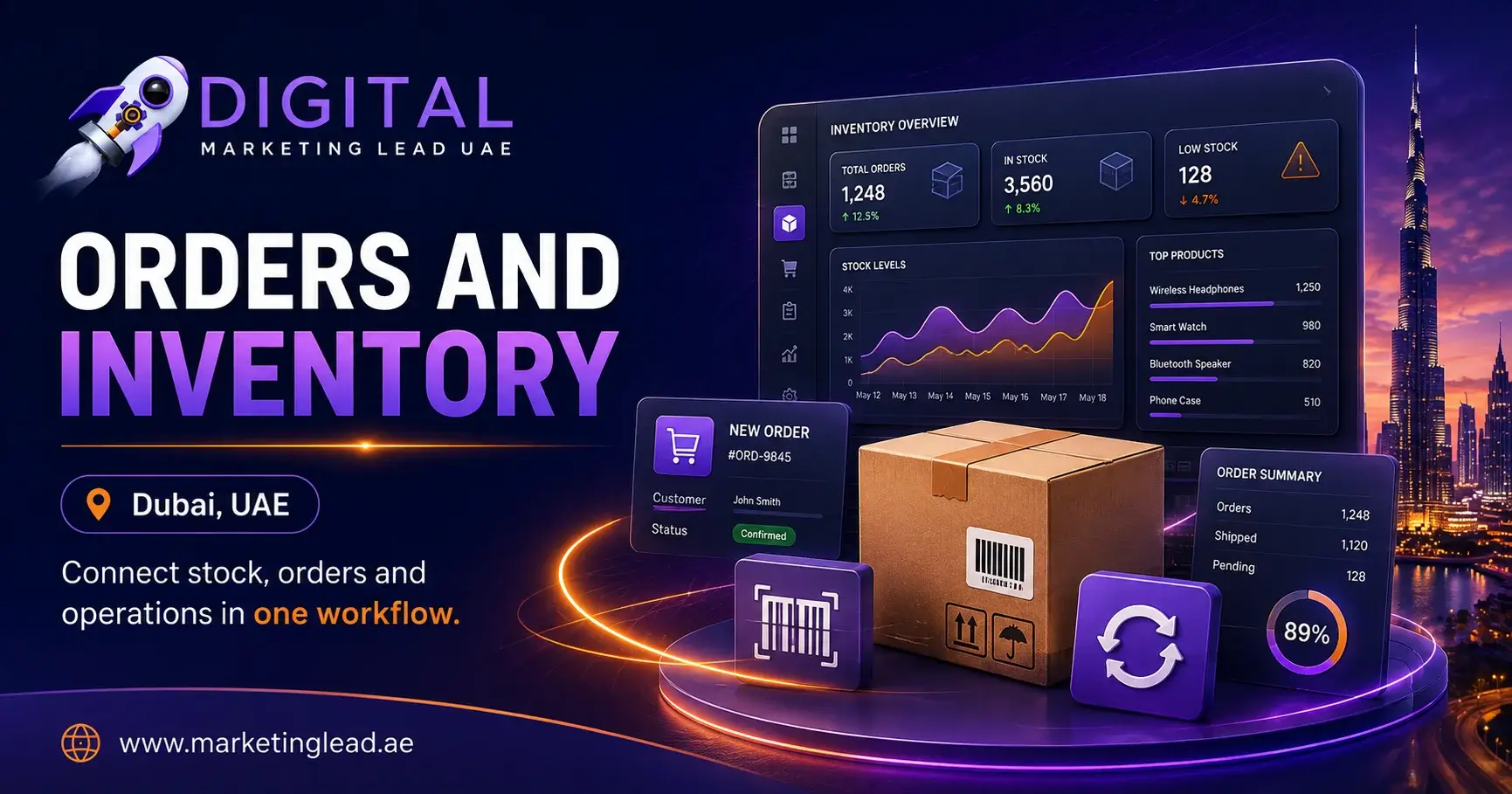
When online orders, warehouse stock and accounting records are managed separately, teams face overselling, delayed fulfilment and repeated data entry. Orders and inventory automation connects these systems so every sale updates stock, triggers fulfilment and keeps customers informed.
The connected order lifecycle
A complete flow begins when an order is placed. The system validates payment, reserves inventory, selects a warehouse, creates fulfilment tasks and sends order details to accounting or ERP software. Shipment updates can then return to the store and customer automatically.
Inventory synchronization
Stock should be updated whenever products are sold, returned, transferred, received or adjusted. For businesses with multiple locations, the integration can maintain stock by warehouse and expose only the available-to-sell quantity to each channel.
Preventing overselling
Overselling happens when channels rely on delayed or inaccurate stock. Real-time updates, safety stock rules and order reservation logic reduce this risk. High-volume businesses may also use a queue to process updates reliably during traffic spikes.
Useful integrations
Common connections include Shopify, WooCommerce, custom ecommerce websites, marketplaces, POS systems, warehouse software, courier platforms, accounting tools and ERP solutions. Product SKUs and variant IDs must remain consistent across all systems.
Reporting advantages
Connected data makes it easier to measure best-selling products, fulfilment time, stock ageing, returns and channel profitability. Teams can reorder earlier and identify slow-moving inventory before it becomes a cash-flow problem.
Why work with Marketing Lead?
Marketing Lead helps UAE businesses connect marketing, sales and operations through practical API and CRM integrations. We focus on accurate data mapping, secure implementation, reliable automation and workflows that are easy for your team to manage.